Sustainable Wood Choices That Move Modern Buyers
Buyers of new construction increasingly ask where building materials come from. Many want homes that feel healthy, responsible, and built to last. Sustainable forestry and certified wood give you a concrete story that satisfies those expectations. Instead of vague green claims, you can point to verified practices in real forests and mills. That clarity can turn a standard new build into a standout listing.
Certified Wood 101 for Real Estate Professionals
Sustainable forestry focuses on harvesting timber in ways that protect wildlife, water, and long term forest health. Certified wood products come from programs that verify those practices and track materials from forest to finished home. For real estate agents, that means you can reference independent standards rather than relying on a builder’s marketing language. It adds credibility when you describe how the framing and finishes were sourced. You are not just saying the home is green; you can show how it meets specific expectations.
In new construction, certified wood can appear in framing lumber, sheathing, subfloors, cabinets, doors, trim, and flooring. Visible surfaces like hardwood floors and cabinetry are especially powerful, because buyers see and touch them during showings. Less visible components, such as roof decking or engineered beams, still support the sustainability story when you reference them in print materials. Many buyers appreciate knowing that even hidden parts of the home reflect responsible choices. Your job is to connect those unseen details to the overall value of the property.
From Forest to Front Door: Labels That Matter in New Construction
Several major certification systems verify sustainable forestry and chain of custody for wood products. They all revolve around independent audits, responsible forest management standards, and tracking material as it moves through mills and distributors. Builders or suppliers often hold certificates that allow them to label certain products as certified. As an agent, you do not need to memorize every technical rule behind each program. You only need to understand that these labels signal credible, third party oversight.
During pre listing preparation, ask the builder or developer which certification systems their wood products carry. Request product data sheets, invoices, or specification documents that identify certified materials by name. Keep those documents in your listing file so you can reference them in marketing copy and buyer conversations. Screenshots or photos of labels on pallets and packaging can also support your story. This simple evidence helps buyers feel that the sustainability claims behind the home are real and verifiable.
Marketing Storylines That Turn Certified Wood into a Selling Feature
Certified wood in new construction is most persuasive when you frame it as part of a bigger lifestyle narrative. Instead of leading with technical terms, connect sustainable forestry to comfort, pride, and long term confidence. You might describe how families can enjoy a modern home that respects forests and wildlife. You can highlight that the wood supporting the roof and floors came from well managed forests rather than unknown sources. When you present certified wood this way, it becomes a memorable emotional advantage, not just a label.
Listing descriptions are a prime place to showcase this advantage with concise, buyer focused language. Mention certified wood alongside other premium features, such as energy efficient windows and modern insulation. Emphasize that the home was built with responsibly sourced lumber and finishes, not just stylish surfaces. Keep the tone positive and aspirational, helping buyers picture themselves living in a space that aligns with their values. Strong phrasing around sustainable forestry can differentiate your listing even when competing homes have similar square footage and layouts.
Talking Points for Showings, Open Houses, and Virtual Tours
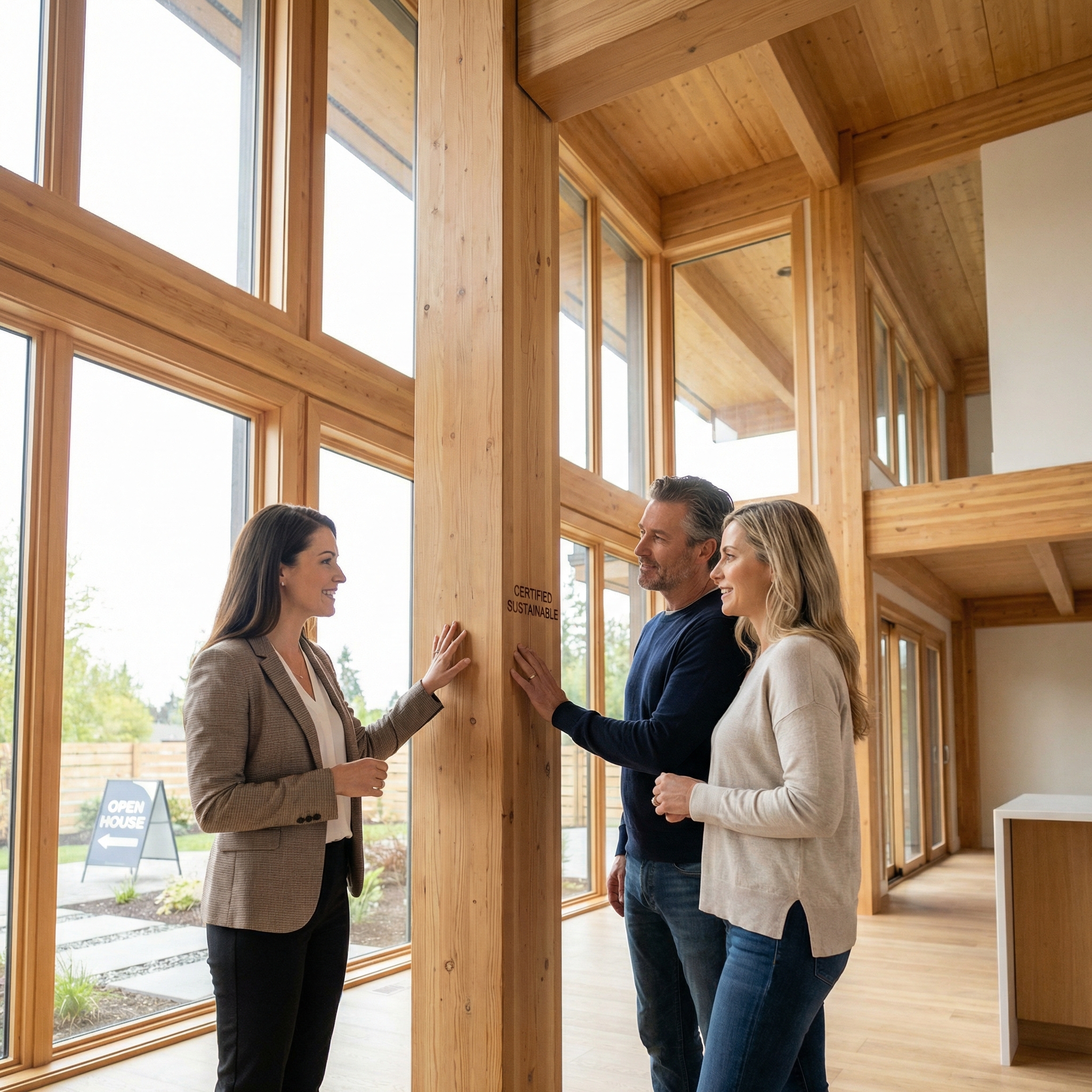
During in person showings, certified wood gives you natural conversation starters in almost every room. In the living area, you can invite buyers to notice how the hardwood flooring feels underfoot and explain its certified forest origin. In the kitchen, you can talk about cabinets built from responsibly sourced wood rather than generic imports. In hallways and bedrooms, door slabs, trim, and closets all present touch points for the story. Buyers begin seeing sustainability woven into the structure rather than tacked on as an afterthought.
For virtual tours, highlight certified wood in captions, overlays, and narration where appropriate. Short notes about responsible flooring, doors, and structural components can stand beside room dimensions and design features. Include a brief section in your digital brochure or feature sheet explaining what sustainable forestry means for the home. Encourage online viewers to bring questions about materials to their private tour. This consistent messaging helps keep certified wood top of mind from first click through closing.
Working with Builders to Specify Sustainable Forestry Products
Your influence on material choices is strongest when you engage builders early in the design and planning process. Share feedback from buyers who ask about environmental impact and responsible sourcing in new construction. Explain that certified wood can help differentiate their projects in crowded markets without changing a home’s architectural style. Many builders already have access to certified products through existing suppliers but have not made them a priority. When you connect these options to faster sales or stronger offers, they are more likely to listen.
Ask builders which elements of the home could be upgraded to certified products with minimal disruption. Floors, cabinets, and trim often offer visible value for modest changes in specifications. Structural components like beams and sheathing can enhance the sustainability story even if buyers never see them directly. Work together to create a simple summary of certified materials that you can use in your listing package. Over time, this collaboration helps position the builder as a responsible, forward thinking partner in the eyes of buyers and investors.
Using Certified Wood to Support Appraisals and Long Term Value
Appraisers may not always assign direct dollar adjustments for certified wood, but documentation still matters. Clear records of sustainable materials can help demonstrate overall construction quality and thoughtful design. Features such as durable hardwoods from well managed forests can support arguments around longevity and reduced replacement needs. Responsible sourcing may also be viewed positively by some institutional buyers and lenders focused on environmental risk. When you present certified wood as part of a broader quality narrative, it can strengthen the value story even without explicit line items.
For long term resale potential, today’s sustainable forestry decisions can become tomorrow’s marketing edge. Future buyers are likely to be even more aware of resource conservation and supply chain transparency. By keeping certificates, product lists, and marketing summaries in the owner’s records, you preserve that advantage for the next transaction. Encourage owners to pass this documentation to future listing agents through their homeowner files. In this way, every new construction home built with certified wood becomes an asset that supports both the forest and the property’s enduring market appeal.